How a tongue tie can affect breath support in singers and musicians.
The fascial pathway from tongue to diaphragm
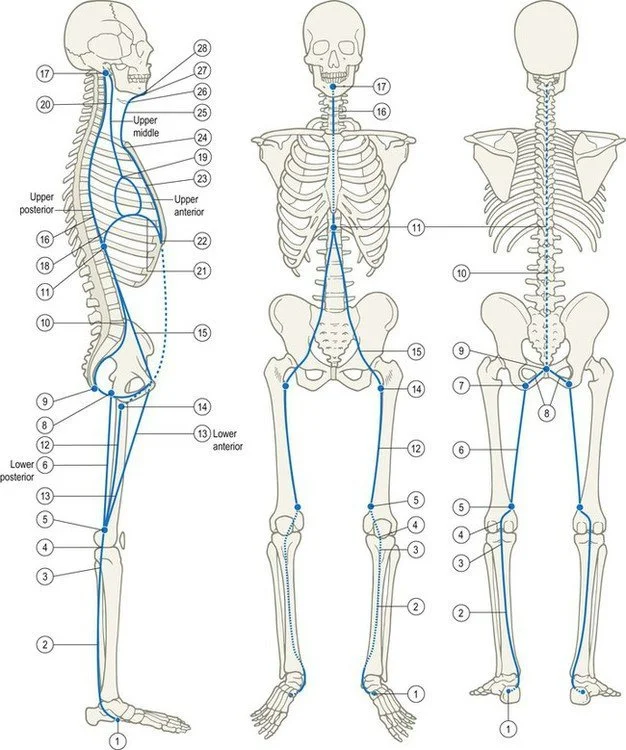
A tongue tie can restrict diaphragm movement by creating tension and imbalances along the deep-frontal-fascial line. Fascia is a type of connective tissue that sits between the muscles in the body and forms a three-dimensional web-like structure throughout the body. It surrounds and supports muscles by providing structural integrity and allowing them to move and function properly. The deep-frontal-fascial line connects various structures, including the tongue, throat, and diaphragm, forming a continuous pathway.
When the tongue is tied down, it can pull on the fascia, causing restrictions and limiting the diaphragm's ability to fully expand and contract. This can result in shallow inhalation, difficulty exhaling fully, and overall difficulty in firing the breath support musculature correctly. By addressing and releasing the tongue tie, the fascial line can regain balance and freedom of movement, allowing for improved diaphragmatic function and enhanced vocal performance.
Beyond breathing: the whole interconnected system
But the connection between a tongue tie and the deep frontal fascial line extends beyond the diaphragm's impact on breathing. The fascial network encompasses various structures — including the muscles of the face, jaw, and neck, which are also vital to free vocal production. When the tongue is tied, it can create tension and imbalance throughout these interconnected tissues, potentially leading to a huge variety of compensatory patterns and restrictions including soft palate issues, jaw tension issues, and even shoulder tension issues.
Therefore, addressing a tongue tie is crucial not only for improving your singing technique from the neck up, but also for restoring the diaphragm's healthy role in breathing and vocal expression.